Tag Archives: liberalism

F&L Blog – Untangling Donald Trump

Untangling Donald Trump: Between Liberalism and Fascism

Fred Block

13.08.2025

The relentless series of shocks in the first five months of Donald Trump’s second administration has left most observers stunned and confused. One horrendous set of policies has followed another. There is the destructive march of the Department of Government Efficiency (DOGE) team through government agencies, the abrupt ending of U.S. foreign aid programs, the on-again, off-again, on-again tariffs, the push for a major budget bill that will cut taxes for the rich while throwing millions off of medical coverage, the war against major institutions including the National Institutes of Health, the legacy news media, Ivy League Universities, the largest corporate law firms, and the disregard of the courts in sending noncitizen detainees to overseas Gulags. And now we have the U.S. Marines on the streets of Los Angeles in response to minor acts of violence. How can we make sense of these changes?

Trump’s initiatives are part of an authoritarian playbook. Trump is using every ounce of executive branch power to cow potential opponents into submission. Arresting pro-Palestinian campus activists and deporting people without due process is sending the signal that public dissent is dangerous. The attacks on big law firms, universities, and legacy media are intended to force these major pillars of civil society to acquiesce in whatever MAGA policies Trump chooses to pursue.  

During the first Trump Administration, Adam Serwer made the cogent observation that “the cruelty is the point.” That continues to be true in the second Trump Administration with the abrupt cessation of food aid overseas, the shipping of Venezuelan immigrants to concentration camps in El Salvador, and the huge cuts in social programs in the President’s “big beautiful” budget bill. 

For Trump, the actual consequences of the tariffs for the economy are largely irrelevant; he is not doing it to accomplish anything other than the exercise in dominance. To be sure, if the economic, political, and foreign policy consequences are too negative, he will “coward out” and move on to another display of dominance. He has the threatened conquest of Greenland, Canada, or the Panama Canal in reserve as future exercises in the unilateral exercise of irrational authority.

Trump’s commitment to irrationality is not unique. Richard Nixon and Henry Kissinger tried something similar back in the 1970’s with the “madman” strategy vis-à-vis their former communist adversaries. The idea was to convince North Vietnam, the Soviet Union, and China that Nixon was so crazy that he might further escalate the war against North Vietnam by using nuclear weapons or by deliberately bombing the dikes on the Red River to create catastrophic flooding. But this ploy ultimately proved ineffective.

In contrast, Trump’s version of the madman strategy has been effective at home. His threats that he will defy legality and take direct revenge against universities, corporate law firms, legacy media companies, and other businesses that refuse to bend the knee has produced a wave of subservient surrenders. He successfully intimidated Republicans in the House of Representatives to vote for a cartoonishly awful and electorally indefensible budget bill.  

The Neoliberal Agenda

It is also true that much of what Trump has been doing is completely consistent with a long-term right-wing Republican agenda that has considerable support from the business community. He has been faithfully delivering on the wish list compiled by the Heritage Foundation’s Project 2025 which is basically a more radical version of the neoliberal agenda pushed by Ronald Reagan and Margaret Thatcher four decades ago.

Trump’s Administration has crippled government regulation of business including measures for environmental protection, protections against financial fraud, and efforts to assure product safety. He has also dismantled the government infrastructure that protects racial groups, women, and others from discrimination.  Huge personnel cuts at the Internal Revenue Service undermine effective tax collection. Trump has further escalated the historic right-wing campaign against the regulation of business by firing the heads of independent regulatory agencies who previously could only be terminated for cause.  Thus far, the Supreme Court seems ready to rubber stamp this reversal of doctrine that had been in place since the 1930’s.

Trump with his DOGE allies has been shrinking the civilian side of the federal government by mass firings across a wide range of government agencies. While many of these firings are still being contested in the courts, tens of thousands accepted voluntary buyouts. At the same time, proposed cuts to Medicaid, Medicare, and SNAP (food stamps) benefits will shrink these key safety net programs.

Finally, there are the enormous proposed tax cuts benefiting the wealthy that the House passed even though hardly anybody still claims that they will produce future prosperity. The justification seems to be that the very rich, including the Trump family, deserve every penny that they have garnered, and trying to make them pay taxes is basically immoral.

While these Trump measures are in line with a long-term right-wing business agenda, this agenda does not unify the capitalist class. The group of people who make up the capitalist class—those who have amassed great wealth and those who run major business firms—have become deeply divided in their political outlook. While some are militant supporters of the rightward trajectory of the Republican coalition, others have allied themselves to the Democratic Party.

Most media attention has focused on the network of right-wing billionaires and multi-millionaires who have been fervent supporters of Donald Trump since he came down that famous escalator. This includes key actors in finance who have made fortunes in hedge funds, private equity and cryptocurrencies. They have been joined more recently by tech-based oligarchs including Elon Musk, Peter Thiel, and Marc Andreesen who have seen the second Trump Administration as an opportunity to fundamentally reshape the federal government.

However, Kamala Harris’ campaign and associated groups raised nearly $2 billion—much of which came from very rich people. Forbes reported in late October 2024 that they had identified 83 billionaires who were supporting Kamala Harris and only 52 who were backing Trump. Of course, Elon Musk’s $288 million contribution to the Trump campaign more than made up for this imbalance in billionaire support.

Some of the big money contributors to Harris did so in the hope that once elected she would abandon some of the less business-friendly policies of the Biden Administration. They wanted an end to Biden’s aggressive antitrust policies and greater restraint on deficit spending. However, many also supported her because of deep distrust of Trump for his corruption, his disregard for norms and laws, and his embrace of the radical right’s agenda.

In short, there is little substantive agreement in the U.S. capitalist class over the best policies needed to make the U.S. economy and society work effectively. There is an important and influential faction that wants to roll back not just the New Deal but most of the reforms of the Progressive Era as well.  But there is also a substantial group who look back at Bill Clinton’s Administration with considerable nostalgia. He pursued a balanced budget, ended welfare entitlements, and presided over an economic boom. Finally, there is even a group who has come to believe that the inequality in income distribution is now too extreme, and that steps must be made to improve the living standards of working class and poor people. A group called, Patriotic Millionaires, has been lobbying for higher taxes on themselves.

Whatever these divided preferences, Trump’s madman performance has effectively intimidated those members of the ruling class who run actual organizations. Whether they manage a legacy media outlet, a university, a law firm, a bank, or a medium-sized or giant corporation, the risks are great of offending a President obsessed with vengeance against his opponents. He can cancel federal contracts, impose negative regulatory actions, and pursue criminal or tax evasion charges. The safest strategy is to keep one’s head down and one’s mouth closed and avoid conflict. If he comes after you—as he has with law firms, universities, and media companies—make a quick deal and give him what he wants.

The key point is that Trump’s only means to pursue the neoliberal agenda of more tax cuts for the rich, reducing regulation, and shrinking social programs is through the exercise of his style of irrational authoritarianism. The neoliberal policies are now deeply unpopular, even with substantial segments of Trump’s electoral base who depend on programs like Medicaid and Medicare that are scheduled for massive cuts. Moreover, the agenda is also opposed by critical parts of the capitalist class, even as many of them are too fearful to express that opposition in public. In short, Trump has to rely on intimidation to force Republicans in Congress to rubber stamp his efforts.

The irony is that Trump’s various irrational initiatives end up further eroding his political support. The crazy tariffs, the catastrophic gutting of foreign aid programs, the assault on green energy spending, and the systematic assault on federally funded scientific research are disliked by much of the business community and by large majorities of the public. Even the mass deportation program is upsetting to many employers and much of the public.    

This provides some grounds for hope in a terrifying political environment. Precisely because Trump’s policies have attacked so many different constituencies simultaneously, the possibility exists for political protests on a scale not seen in the U.S. since the Great Depression.  Trump and his minions will probably respond to such protests with military force, as they have started doing already in Los Angeles. But the repressive capacity of his regime is limited because in contrast to Mussolini and Hitler, Trump lacks disciplined paramilitary units eager to assault or kill their political opponents.   

How this all ends remains highly uncertain. What we do know, however, is that decades of neoliberalism have culminated in Trump’s frontal assault on democratic governance.
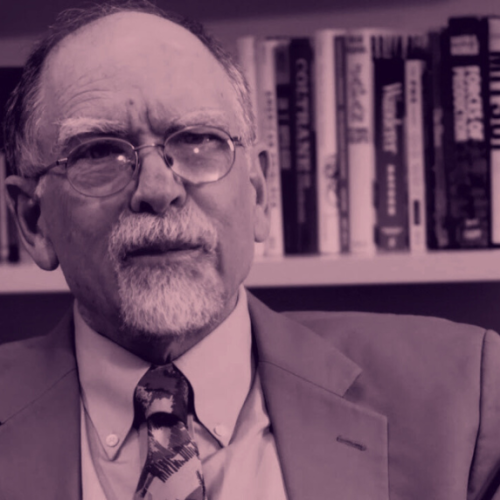
Fred L. Block is Professor of Sociology at UC Davis. He is widely regarded as one of the world’s leading sociologists and followers of Karl Polanyi.
Further Reading

  • Block, Fred L. (2025). The Habitation Society: Creating Sustainable Prosperity. Agenda Publishing. Link
  • Block, Fred. L (2018). Capitalism: The Future of an Illusion. University of California Press. Link

F&L Blog – Unmasking the Dehumanizing Logic of The Capital Order

Unmasking the Dehumanizing Logic of The Capital Order

Clara Mattei & Aditya Singh

07.08.2025

The current shame of a Western capitalist world that finances and conceals the ongoing obliteration of Gaza’s population—including forced starvation and the illegal bombing of over one million children, thousands of medical workers, teachers, and more than 230 journalists—cannot be understood in isolation from the economic system we have constructed over the past 300 years. The essential connection between political outcomes and the prevailing economic structure—an insight central to Karl Polanyi’s work—must be brought back to the forefront if we are to make sense of the human tragedy our governments are actively sponsoring.

Contemporaneous with Polanyi’s great work (1944), the Frankfurt School went further to warn us about the inextricable link between the Western-led genocide of the Holocaust and the instrumental rationality fostered by capitalist economies—where all meaning and human interaction become subordinated to abstract measures that dominate us and ultimately erode our shared humanity.

They drew inspiration from Karl Marx, who in the very first chapter of Das Kapital laid the foundation for his critique of political economy: our ways of thinking emerge from specific social relations in which use value and human meaning are subordinated to the value form—an abstraction that embodies the logic of capital accumulation. In such an inverted world, genocides are not aberrations but systemic features of capitalist history. In fact, they often fuel economic growth: for example, the global arms trade, valued at over $600 billion annually, thrives on sustained conflict and destruction. Post-war reconstruction efforts, resource extraction, and disaster capitalism generate trillions in profit, converting human suffering into capital expansion. These economic incentives help explain why genocides have been repeatedly tolerated—and even supported—by capitalist states.

The liberating insight of Marx’s critique of political economy lies in his recognition that social alienation is neither eternal nor spontaneous. This truth becomes especially evident during critical junctures in the history of capitalism—moments when its “natural” appearance collapses and the capitalist order is brought into question. After the Great War, for example, a large majority of European workers began to challenge the sanctity of capitalism’s two core pillars: the wage relation and private ownership of the means of production. The state’s large-scale intervention to accelerate capital accumulation—at a time when market mechanisms failed to deliver the production speed required to win the war—served to politicize both wage labor and private command over investments. It laid bare what is the most Polanyian of all insights: that these institutions exist not by nature, but through explicit political decisions made by the state to protect capital at the expense of labor. In other words, the market and its exploitative practices rest on a fundamentally political foundation.

The crisis of the capital order was embodied in a wide range of post-capitalist experiments, which we examine in detail in the first part of The Capital Order, now available in German translation by Brumaire Verlag. Soviets were not confined to Eastern Europe; even in the heart of the capitalist West, movements like guild socialism, the nationalization of coal, and factory councils were actively demonstrating that democratic work relations could assert the primacy of use value and human need over exchange value and profit.

It is precisely in these moments of rupture that the exponents of instrumental reason and capital domination return to the drawing board. They refine their strategies to safeguard the capitalist order, closing the system’s breaches through the ferocious implementation of austerity policies designed to break the backs—and the wills—of organized workers and peasants. As The Capital Order documents, what the Treasury and the Bank of England accomplished in Britain through interest rate hikes and cuts to social expenditures—measures that heightened unemployment and deepened the market dependence of the working majority—was mirrored in fascist Italy. There, Benito Mussolini’s regime pursued similar ends through brutal state coercion, outlawing strikes, suppressing wages, and murdering political opposition.

The case study of the 1920s demonstrates the deep structural affinities between liberal and fascist economic policies, both centered on the austerity trinity (fiscal, monetary, and industrial austerity) that we see operating still today. The watchword coined at the Brussels conference sponsored by the League of Nations was “work hard, live hard, and save hard”: cuts in social expenditures, regressive taxation, dear money, privatizations and elimination of labor rights.

Liberal and fascist elites, along with their technocratic experts, not only followed a strikingly similar economic playbook, but also offered each other mutual support. Indeed, there is a strong case to be made that Mussolini’s fascist party could gain strength and flourish in a full-blown dictatorship thanks to the unyielding ideological support of the Liberal establishment which recognized that only an authoritarian state could defend the capital order in a country like Italy—where revolutionary energy among workers and peasants had reached a boiling point. This letter of Montagu Norman to Jack Morgan Jr of the House of Morgan (what is still the largest bank in the world) exemplifies a common sentiment:

“Fascism has surely brought order out of chaos over the last few years: something of the kind was no doubt needed if the pendulum was not to swing too far in quite the other direction. The Duce was the right man at a critical moment.” (Letter to John Pierpont “Jack” Morgan Jr., November 19, 1926, G1 307, fol. 27, in Mattei (2022) The Capital Order, page 257)

Fascist and liberal austerity did, in fact, achieve their intended goal: the subjugation of workers to the capital order—at the expense of fundamental human principles. The brutal face of political oppression in Italy soon found a successor in the rise of Nazi Germany. If Mussolini gained support through his promise to eradicate economic democracy and dismantle organized labor, especially via austerity, Hitler rose to power as a direct consequence of austerity’s “success.”

Indeed, more than a decade of punishing austerity policies imposed by Germany’s liberal governments—under pressure to meet the austerity mandates of the League of Nations—had the same intended effect of crippling working-class organization and consciousness in Germany, thereby opening the door for the far right to seize control. In dynamics that we still see clearly today, the political right thrives in conditions of permanent austerity, capitalizing on the precarization of everyday life and the popular internalization of neoclassical economics. As people suffer, they are encouraged to blame weaker or marginalized groups rather than recognizing the systemic causes of their insecurity.

Just as Hitler advanced a militarized version of the austerity regime—repressing wages and labor rights to favor private accumulation—today’s European agenda of growing militarization at the expense of social welfare reveals a chillingly similar logic. If social spending risks politicizing labor, militarization—along with its genocidal consequences—more faithfully serves the dominance of the value form in capitalist society.

A genuine commitment to peace and democratic participation cannot coexist with the imperatives of the capital order. Building a more just and livable future will require the courage to dismantle and redesign our economic foundations.

———————-

[1] Lord Robert Chalmers, the former permanent secretary at the British Treasury, noted that to regain “equilibrium,” the “painful” solution was to “work hard, live hard, and save hard” (Brussels 1920, Verbatim Record, vol. 2, 26– 27, italics added); cited in Mattei, Clara E. The Capital Order: How Economists Invented Austerity and Paved the Way to Fascism. Chicago: University of Chicago Press, 2022. p.134-135.

Clara Mattei is the director of the Center for Heterodox Economics (CHE) and a professor of economics at the University of Tulsa.

Aditya Singh

Aditya Singh is a PhD student in economics at the New School for Social Research.

Further Reading

  • Mattei, Clara E (2022). The Capital Order: How Economists Invented Austerity and Paved the Way to Fascism. Chicago: University of Chicago Press

F&L Blog Launch Announcement

Blog Launch: Fascism and Liberalism - Yesterday and Today

Solveig Degen, Maie Klingenberg & Andreas Novy

31.07.2025

One hundred years ago, Austro-Hungarian economist Karl Polanyi witnessed the collapse of liberal democracies and the rise of fascism in Europe – a development which he famously analyzed in The Great Transformation. Following the onset of the Great Depression in 1929, economic liberalism was on the defensive. The widespread belief that laissez-faire capitalism and the prevailing property relations were without alternative had crumbled after the experience of far-reaching state interventions during World War I. Moreover, the assertiveness of a revolutionary workers’ movement, including its vision of democratic control over production via workers’ councils and the tools of economic planning left the propertied classes in distress. However, not socialist but fascist ideas eventually gained the upper hand in the 1930s in different parts of Europe. Commenting on these developments, Karl Polanyi remarked in 1944[i]:  

 “Planning and control are being attacked as a denial of freedom […]. Yet the victory of fascism was made practically unavoidable by the liberals’ obstruction of any reform involving planning, regulation, or control” – Karl Polanyi 1944, p. 265 

In her acclaimed 2022 book The Capital Order[ii], Clara Mattei shows how austerity served as a key tool for enabling broader regime change. In the 1920s, austerity was imposed by democratic means in the UK, Germany, and Austria, creating socioeconomic conditions that ten years later were conducive to the rise of fascism. In Italy, however, it was only under fascist rule from 1922 onwards that the austerity agenda of economic liberalism could be implemented. These historical examples reveal a troubling pattern: A hundred years ago, sacrificing democracy and civic liberties to uphold economic orthodoxy seemed justifiable to important parts of the liberal elites. Today, similar anti-democratic dynamics can be observed, which raises urgent questions: Will today’s liberal elites once again forsake political equality and individual freedoms? And will they, once again, open the door to authoritarian, reactionary, and anti-democratic far-right movements? 

Historical analyses show that prominent thinkers of economic liberalism such as John Stuart Mill (1806–1873), Friedrich Hayek (1899–1992), and James M. Buchanan (1919–2013) shared a deep-seated mistrust of decisions made by societal majorities. Many of their beliefs were fundamentally anti-egalitarian, including the convictions that mass democracy endangers freedom and that state intervention is incompatible with market economies.  
Today, the tensions between economic liberalism and democracy are becoming increasingly visible again: neoliberal policies driving privatization and marketization have undermined the capacity of states to address urgent societal challenges, such as widening social inequalities and accelerating climate breakdown. Donald Trump’s administration of neoliberals, billionaires, racists and sexists is taking these anti-public strategies even further, providing a prime example of how economic liberalism and fascism are entangled in protecting societal hierarchies, capital interests, and neo-colonial structures. Despite evident ideological contradictions, unlikely alliances between nationalist figures such as Trump and anarcho-capitalists such as Javier Milei and Peter Thiel appear to flourish.
 
In Europe, we see striking parallels: In early 2025, a potential coalition between the Austrian far-right FPÖ, and the conservative ÖVP was endorsed by the representative of the Federation of Austrian Industries, despite the open challenge of the FPÖ “people’s chancellor” Herbert Kickl of key political and civic liberties, social rights founded in the institutions of liberal democracy, and the welfare state. Whereas the negotiations failed at the last second, an austerity discourse continues to dominate public debate in Austria. In Italy, the ministry of education under post-fascist Giorgia Meloni wants to turn highschoolers’ history curriculum into an appraisal of Western civilization including apologetic and distorted representations of World War II and European imperialism. A few weeks ago, the proposal to grant Italian citizenship to diligent pupils demonstrated chillingly how closely the neoliberal myth of meritocracy and eugenics lie together. All the while, the complete annihilation of civilian life in Gaza is tolerated and, in some cases, actively supported by liberal democracies such as Germany, which continues to authorize arms deliveries to Israel. 
 

With this new blog, we, the International Karl Polanyi Society (IKPS) aim to further investigate and improve our understanding of the relationship between fascism and economic liberalism, both historically and in the present day. Publishing bi-weekly pieces on this topic from key scholars in the field, we aim to contribute to the broader discussion on the rise of contemporary reactionary far-right movements. The blog will provide a platform for discussing central questions such as: What is the connection between austerity and fascism? How do the intellectual foundations of (neo-)liberalism and fascism converge, and what are tensions and contradictions? What has been the role of neoliberal thinkers in furthering far right agendas? And, in the words of Karl Polanyi, is the rise of current far-right movements again “made practically unavoidable by the liberals’ obstruction of any reform involving planning, regulation, or control”? 

 ———————————–

i Polanyi, K. (2001). The great transformation: The political and economic origins of our time. Beacon Press. (Original work published 1944) 

ii Mattei, C. E. (2022). The capital order: How economists invented austerity and paved the way to fascism. University of Chicago Press. 

Andreas Novy

Andreas Novy is is associate professor and head of the ISSET Institute at WU Vienna and president of the International Karl Polanyi Society (IKPS).

Maie Klingenberg is a research assistant at the ISSET Institute at WU Vienna working on the democratization and deprivatization of provisioning systems.

Solveig Degen is a PhD student at the Centre for Social Critique in Berlin working on the socialisation of public services.