
Tag Archives: polanyi

F&L Blog – Muskism, Trumpism, Masculinism

Muskism, Trumpism, Masculinism

Economic liberalism, right wing populism and
the new gender order

by Brigitte Aulenbacher & Birgitt Riegraf

21.05.2026

From “masculine energy” to “tradwives”— contemporary far-right political-economic movements are interwined with a new gender order which is not incidental, but core to understanding their rise, argue Brigitte Aulenbacher and Birgit Riegraf in this latest blog piece. With a focus on the USA, the authors compare the emergence of right-wing populism today, with roots in the aftermath of the 2007-08 financial crash, with the “countermovements” to economic liberalism witnessed by Karl Polanyi during the Great Depression. In contrast to their declared aims, both movements ultimately served to support liberal economic elites. The new era of “Muskism” and “Trumpism” carries on in this tradition, exemplified by the close relationship between governments and powerful tech elites. As a driving force of this development, the authors identify a new masculinism giving shape both to economic liberalism and the gender order.

The rise of contemporary right-wing populism: a Polanyian “countermovement”

“The demand for a more traditional and aggressive form of masculinity functions as an economically and politically charged resource: as a promise of economic and technological growth in times of crisis, and as a promise of order and control in a seemingly chaotic world."

Today’s populist far right has its roots in the early stages of neoliberal globalization. Karl Polanyi wrote his masterpiece The Great Transformation while witnessing the “movement” toward forced economic liberalism in the early 20th century and the emergence of „countermovements“ seeking protection from its destructive effects, such as the socialist, fascist-social and partisan movements, and the New Deal. While there are key differences between the stock market crash of 1929 and the neoliberal era’s financial crisis in 2008 (and their respective effects in terms of precarity, poverty, and social decline) there are historical parallels in that both marked important turning points which strengthened right-wing populism. Several developments point to the rise of the contemporary far right as such a Polanyian „countermovement“. Within Europe, Hans-Jürgen Bieling [1] identifies the crises of finance, poverty and forced migration in the face of wars as a historical „window of opportunity,“ which helped to promote right-wing parties and social movements, and their respective agendas and ideologies. Arlie Hochschild [2] came to a similar diagnosis with regard to the USA. 

At the same time, these movements contain inherent contradictions: they are what Klaus Dörre terms “ambivalox” – a mix of ambivalence and paradox [3]. Many right-wing parties combine economic liberalism with the promise of social protection by transforming questions of social justice into questions of belonging: in terms of “Volk“ (nation), ethnicity, race and citizenship. As found by Atzmüller, Décieux and Ferschli [4], this is used to justify austerity policies. By promising social advancement instead of decline, right wing parties and social movements attract the votes of the working and middle classes. The flipside of this promise is that social concerns are turned into anti-democratic action as they seek to undo emancipatory progress in the politics of equality, diversity, and inclusion as well as the rights of women, migrants and LGBTQI+ communities. At its core, right-wing populism uses identity politics to address the native male working and middle classes –  intermediated by emotions or “affective politics“ and the respective “affective narratives”, [5] while forcing economic liberalism and promoting the respective elites’ agenda. 

Trumpism and Muskism: an elites’ Polanyian movement

A deeper understanding of the phenomenon underlying “Trumpism” (as explored by Faude & Heinkelmann-Wild [6]), or “Muskism” can be gleaned from the recent work of Quinn Slobodian and Ben Tarnoff with On Muskism. A Guide for the Perplexed [7]. In it, the authors diagnose a new era of economic liberalism characterised by the following shifts: authoritarian deglobalization replacing neoliberal globalization; a reconfiguration of the relationship between the economy and the state; new modes of production combined with the reorganization of work and everyday life; as well as a heightened emphasis on technological progress and the relationship between humans and technology.

We put forward that such new alliances between representatives of the most powerful parts of the private sector — such as the tech industry — and authoritarian political forces, constitute a new Polanyian “movement”, one which moves toward forced economic liberalism as soon as the latter enter government. And this development is also inextricably linked to gender relations that are deeply embedded within this process of transformation, be it in Hungary, Argentina, or the USA. Drawing upon the concept of “hegemonic masculinity” by Raewyn Connell [8], we now examine masculinism as a driving force in terms of both the scope and direction of societal transformation. For the purposes of brevity, we limit our analysis to the USA.

Trumpism, Muskism and Masculinism

"If Trumpism or Muskism is characterized by an emphasis on national interests and a new form of technological and economic aggressiveness, this is — quite deliberately — intertwined with the propagation of a new “hegemonic masculinity“ and the celebration of “emphasized femininity”

If Trumpism or Muskism is characterized by an emphasis on national interests and a new form of technological and economic aggressiveness, this is — quite deliberately — intertwined with the propagation of a new “hegemonic masculinity” and the celebration of “emphasized femininity” (as per Raewyn Connell,  enacted in ways that are compliant with, accommodating and subordinated to masculinism). We can hear this rearticulation, intensification, and reconfiguration of male dominance when Meta CEO Mark Zuckerberg calls for more “masculine energy” in business and society — thereby joining other tech giants in promoting an ideal of hyper-individualized, market-driven masculinity. This is then cast in opposition to a “feminine” — or even “effeminate” — energy, which is portrayed both as the very cause of economic, technological, and political insecurities, while appearing powerless to counter them. By contrast, this new masculinity actively embraces all such uncertainties as trials by combat, tests of mettle, and opportunities for personal growth. This embodies precisely what Connell conceptualizes as “hegemonic masculinity” — a construct, the restoration of which attempts to reinstate a lost social order by firmly re-cementing the boundaries of both nation and gender roles. Movements such as that of the “Tradwives”, as investigated by Scott and Day [9], in turn serve as the counterpart designed to stabilize the male hegemonies championed by Trumpism and Muskism.

"the demand for a more traditional and aggressive form of masculinity functions as an economically and politically charged resource: as a promise of economic and technological growth in times of crisis, and as a promise of order and control in a seemingly chaotic world"

As such, contemporary economic and neoliberal political transformations are inextricably linked to the enforcement of an aggressive model of hegemonic masculinity in two distinct ways: on the one hand, by directly conflating the propagated ideal — characterized by entrepreneurial combativeness and risk-taking, authoritarian assertiveness, disruptive social and technological innovation, and fantasies of technological control — with the demand for the rehabilitation and resurgence of aggressive male conduct. On the other, tech elites and the far right not only propagate visions of boundless market utopias, but simultaneously mobilize anti-institutional sentiments — sentiments directed, for instance, against equality policies and democratic procedures in general, disparaging these as both the root cause of societal ills and an impediment to social progress. In both instances, the demand for a more traditional and aggressive form of masculinity functions as an economically and politically charged resource: as a promise of economic and technological growth in times of crisis, and as a promise of order and control in a seemingly chaotic world.

Hegemonic masculinity as central to understanding today’s new economic order

Figures such as Elon Musk and Donald Trump exemplify this dynamic. Their public self-presentation fuses the call for economic libertarianism with a performative reaffirmation of a supposedly lost male sovereignty — whether adopting the persona of the disruptive entrepreneur or that of the authoritarian decision- and deal-maker who pointedly distances himself from any behavior connoted as non-traditionally masculine or feminine. These performances, then, constitute something far more than mere matters of style; rather, they are an integral component of a hegemonic project in which economic deregulation and the hollowing out and capturing of the state are inextricably interwoven with the rearticulation, intensification, and reformation of hegemonic masculinity and traditional gender relations.

The on-going rise of techno-libertarian and right-wing populist ideologies — premised upon the restoration of hegemonic masculinity — is thus the expression of a deeper, underlying dynamic. It is akin what Karl Polanyi in The Great Transformation described as economic liberalism’s  “utopia” of an economy and a society regulated by the market  — a process that, in this instance, is socially, culturally and politically shaped — and simultaneously intertwined — with a radicalized form of hegemonic masculinity that presents itself as a response to a perceived loss of control. It is therefore essential to take hegemonic masculinity seriously, not as a marginal phenomenon, but as a central foundation of contemporary processes of societal transformation.

Brigitte Aulenbacher

Brigitte Aulenbacher is Professor of Sociology at Johannes Kepler University Linz. She combines studies on science, domestic work, senior care and the digital transformation of work with the analysis of contemporary capitalism.

Birgitt Riegraf is Professor of General Sociology at the University of Paderborn. Her research focuses on the sociology of science and higher education, gender studies, critical analyses of the capitalist care economy, and questions of social inequality and intersectionality.

References

  1. Bieling, Hansjürgen (2017): Aufstieg des Rechtspopulismus im heutigen Europa – Umrisse einer gesellschaftstheoretischen Erklärung, in: WSI-Mitteilungen 70(8), S. 557¬–565. 
  2. Hochschild, Arlie (2016): Strangers in their own Land. Anger and Mourning on the American Right, New York/London. 
  3. Dörre, Klaus (2019): “Take Back Control!” Marx, Polanyi and Right-Wing Populist Revolt, in: Österreichische Zeitschrift für Soziologie 44, pp. 225–243.
  4. Atzmüller, Roland/Décieux, Fabienne/Ferschli, Benjamin (eds.) (2023): Ambivalenzen in der Transformation von Sozialpolitik und Wohlfahrtsstaat. Soziale Arbeit, Care, Rechtspopulismus und Migration, Weinheim 
  5. Faude, Benjamin/Heinkelmann-Wild, Tim (2025): Destruction or renewal? Trumpism and the Future of Global Governance, in: Global Public Policy and Governance 5, pp. 305–315. https://doi.org/10.1007/s43508-025-00130-y 
  6. Sauer, Birgit (2026): Affektiver maskulinistischer Widerstand gegen Quotenimplementierung in Europa. Kämpfe um die (Un-)Sichtbarkeit von Frauen in der Politik, in: Feministische Studien 1/2026, S. 48-65; Bargetz, Brigitte/Eggers, Nina Elena (2023): Affektive Narrative: Theorie und Kritik politischer Vermittlungsweisen, in:  Politische Vierteljahresschrift 64, S. 221-246. 
  7. Slobodian, Quinn/Tarnoff, Ben (2026): Muskism. A Guide for the Perplexed, London. 
  8. Connell, Raewyn (1995): Masculinities. Oakland, California.
  9. Scott, Kate/Day, Linsey (2025). TikTok tradwives: femininity, reproduction, and social media, in: Gender and Education, pp. 1–18.

Related Posts

F&L Blog – Functional Democracy

Functional Democracy: Polanyi's Forgotten Antidote to Fascism and neoliberalism

Janek Wasserman

11.09.2025

As Professor of History at the University of Alabama, Janek Wasserman specializes in modern Central European history and the development of economic thought, in particular, Austrian economic thought. In this short essay he traces the formation of Karl Polanyi’s ideas during his Vienna years (1919-1933), especially his theories relating to democracy, liberalism, and fascism. Prof. Wasserman puts forward that Polanyi’s pragmatic and humane proposal for a Functional Democracy – emphasizing the need for transparency and participation in economic and political decision-making – carries important lessons for today, and offers a powerful basis for rethinking economic, political, and social relations in the twenty-first century. 

Polanyi’s quest for a new, non-Marxist socialism ​

"The intervention of fascism...means the practical salvation of capitalism. It is not a return to liberal ‘laissez-faire’ but a planned economy that is led not by an anti-entrepreneurial democratic state but by ‘titans-of-industry’ capitalists themselves.”
Karl Polanyi

When Karl Polanyi emigrated from Hungary to Austria in 1919, he threw himself into the intellectual debates roiling Central Europe, infusing a distinctive blend of Christian spirituality, philosophical idealism, and liberal socialism.  He was disaffected by Communism after the failed Hungarian Revolution—and debates with his friend, the Marxist György Lukács—yet unconvinced about the efficiency or merits of free market capitalism. He argued instead for a system that honored the dignity of the individual.  

His first public Viennese intervention came during the Socialist Calculation debate of 1922. He had no interest in reigniting the dispute between free market liberals (such as Ludwig von Mises), Communists (the Bolsheviks), and the various socialists (Otto Neurath, Karl Kautsky). He agreed with liberals that a centralized bureaucracy could not solve the accounting and pricing problems of a modern economy. However, he disagreed that a capitalist economy was the only – or best – answer. A “practical” third way, pioneered by Otto Bauer, G.D.H. Cole, and Vladimir Lenin, suggested a better solution.  Building on this, Polanyi advocated for a “functional, guild-socialist-organized” form of socialism that opened space for democratic governance within the economy. This approach required democratic participation and transparency in all decisions as part of an “oversight” (Übersicht) apparatus. This functionalism necessitated a new, non-Marxist socialism.  

Morality as the common missing link between collectivist and capitalist approaches ​

Polanyi believed liberals, conservatives, and Marxists had failed to theorize an efficient and moral economy. Both liberals and collectivists were myopically focused on accounting as the basis of a functioning economy. While the former emphasized market prices and profits for decision-making; the latter stressed state statistics and production quotas. As he wrote in his essay “Sozialistische Rechnungslehre” (Socialist Accounting Theory), neither could justify their decisions based on social or moral principles: “Whether these goals are ‘theoretically’ right or wrong, possible or impossible, moral or immoral, contradictory or logical, accounting must remain indifferent (gleichgültig).” 

In Polanyi’s view, this moral agnosticism doomed both approaches as the foundation for a humane economy. A humane system must marry productive efficiency and social justice. Collectivism had failed to maximize technical output and achieve positive social outcomes, as the Bolshevik regime had already revealed. In the Capitalist model, too, technical production lagged because zero-sum competition hindered the efficient allocation and utilization of productive resources in various sectors, while the boom-and-bust nature of finance capitalism led to production gridlocks and bottlenecks. These technical failures left the common interest (Gemeinnützigkeit) by the wayside. 

The capitalist system had no means for understanding (or calculating) the social relations between people that—as opposed to prices— undergirded all economic production. Channeling the earlier Viennese reformer Josef Popper, Polanyi argued that this condition, “…contradicted the right to live that every member of society possesses.”

Centering democratic and transparent decision-making in a functional democracy ​

Polanyi’s termed his alternative the ‘functionally organized society’ (or ‘functional democracy’). Such a system would place democratic representation and transparent decision-making at the center of production and consumption decisions. Associations for producers and industries would co-exist alongside consumer societies. The political nature of these open negotiations ensured their effectiveness and ethics: “The commune is not only a political organ but the actual carrier of the higher goal of the common good.” Ongoing negotiations would assure just wages and prices, a reasonable distribution of goods and profits, an equitable allocation of productive resources, and acceptable levels of capital reinvestment. They would also engage people as active participants in economic and political processes. 

While liberals such as Ludwig von Mises objected that “functional socialism” lacked a clear executive power and remained “nebulous and vague” for Polanyi, the lack of a single basis of power was precisely the point. Functional socialism (or functional democracy) was not about naked power relations (Machtverhältnisse) but relationships of mutual recognition (Anerkennungsverhältnisse).

A need for empathy in economics ​

Polanyi saw oversight as the pathway to a transformed human order. Oversight concerned moral questions as much as material ones. Grappling with such disparate sources required empathy. As he wrote in “New Reflections Concerning Our Theory and Practice”: “Means of production are visible, tangible aspects of the external world, which are countable, measurable and externally ascertainable. The needs and hardships of another person, by contrast, we can only envision in some fashion, through mentally putting ourselves in his situation, through an empathetic experience of his needs and hardships, through entering into them within ourselves.” Only through interpersonal interactions could human beings understand one another’s needs. Administrative bodies and unions could assist with external (material) oversight, but inner (intersubjective) oversight required democratic self-organization.

How neoliberalism’s 'cruel rationality' paved the way for fascism ​

“Never and nowhere did Hitler promise to his followers the abolition of the capitalist system. Rather, the essential thrust of his program consisted in a belief in the healthy functioning of the capitalist system within the nationalist state.”
Karl Polanyi

Polanyi would later link the failures of liberal economics with the rise of fascism—the twin causes of the crises of the 1930s. His critiques of contemporaries such as Mises, Friedrich Hayek, and Walter Lippmann, not to mention classical British political economists, formed the core of his analysis of early neoliberalism, which culminated in his 1944 The Great Transformation

He utilized the young Marx’s ideas of alienation to critique liberal categories of goods, labor, land, and capital. In “Community and Society,” Polanyi lamented the cruelty that passed as rationality in liberal society: “Grotesque perversions of common sense take on the semblance of rationality under the way of what is supposed to be an economic law.” Labor became, “a commodity to be bought and sold, like cucumbers. That to this commodity a human being is attached is treated as an accidental feature of no substantial relevance.” The use of money exacerbated alienation, obscuring the reality of human relations behind the seemingly objective notion of value. The fetish of capital was, “the most disastrous to the emancipation of mankind,” because it effaced the accumulated human labor in capital goods.

In their quest for stability, neoliberals embraced illiberalism ​

The specter of fascism increasingly haunted Polanyi’s thoughts. He saw it as an atavistic reaction against the failed promises of liberalism, even as it entrenched capitalist relations. Polanyi associated fascism with the growing rift between liberal economics and democracy. Contemporary liberals such as Mises disparaged parliamentarianism and sided with conservatives and fascists in a quest for economic stability, thus destroying the very freedoms they claimed to support. Fascists responded to the spiritual needs that liberalism had betrayed. Politically, fascism was anti-democratic and illiberal; it supported authoritarianism and dictatorship. Economically, it opposed democratic socialism and capitalism, preferring a corporatist economy. Its “anti-capitalism” focused on finance capital (with an antisemitic stamp) rather than economic inequality or property relations. Ideologically, it emphasized ideas of race, blood, myth, and empire against reason, humanity, law, and democracy.

For Polanyi, fascism failed as a solution because it destroyed individual freedom and re-entrenched capitalism. This was his major contribution to fascist theory and an important note on modern capitalism: “The intervention of fascism in this sense means the practical salvation of capitalism, and indeed with the help of revolutionary transformations of the entire state and social system. It is not a return to liberal ‘laissez-faire’ but a planned economy that is led not by an anti-entrepreneurial democratic state but by ‘titans-of-industry’ capitalists themselves.” Polanyi saw fascism’s total subordination of the state and society to the economy as the culmination of liberal economistic fantasies. Fascism and the market fundamentalism of neoliberalism had much in common. 

Polanyi saw national socialism as capitalism rooted in a nationalist state ​

By the time Polanyi left Vienna in 1933 he had developed powerful critiques of fascism, liberalism and capitalism. Polanyi’s analysis of Othmar Spann’s universalism, the Austro-Fascist Constitution of May 1934, and National Socialism laid bare their claims of “true democracy” and anti-capitalism. For Polanyi, Spann was an intellectual pioneer whose system anticipated the Fascists and Nazis. But Spann’s corporatist system left economic control in the hands of the elites.  In  “Spanns faschistische Utopie,” Polanyi concluded, “His utopia confirms that the essence of fascism guarantees the control of property owners and managers of the means of production over the economic chamber, establishing the power of that chamber over society as a whole.” 

Polanyi made the same point about Austro-Fascism, whose leaders paid lip service to Catholic social theory yet rooted their power in capitalist economics. Polanyi disparaged the May Constitution as, “an embodiment of religious and racist fundamentalism,” and, “the arrival of theocracy.” The corporate bodies in the Austrian state had no democratic representation; everyone was appointed.  

National Socialism failed Polanyi’s test even more egregiously. Within months of gaining power, Hitler abjured attacks on the wealthy and promised an end to economic experimentation. Polanyi declared acidly in “Hitler und die Wirtschaft,” “Never and nowhere did Hitler promise to his followers the abolition of the capitalist system. Rather, the essential thrust of his program consisted in a belief in the healthy functioning of the capitalist system within the nationalist state.” Nazi leadership clearly had no interest in the “S” in the NSDAP. 

No alternative? Revisiting Polanyi's powerful call for a functional democracy ​

“[Social freedom] is based on the real relation of men to men… Being free therefore no longer means, as in the typical ideology of the bourgeois, to be free of duty and responsibility but rather to be free through duty and responsibility.”
Karl Polanyi

Recasting Marx’s thought in a humanist vein allowed Polanyi to imagine a popular front against fascist capitalism. It opened the door to a “sphere of the personal.” In “On Freedom” Polanyi conceptualized a new theory of social freedom: “[It] is based on the real relation of men to men… Being free therefore no longer means, as in the typical ideology of the bourgeois, to be free of duty and responsibility but rather to be free through duty and responsibility.” Our reimagined communities would not be the realm of individual freedom imagined by liberals, nor the völkisch dystopias of the fascists. They would rest on mutual dependence, empathy and social freedom.

Ninety years later, Polanyi’s lessons endure. Fascism and far-right populism pose renewed threats to the world order. Capitalist individuals and corporations once again accommodate illiberal politicians in the name of shareholder value and profit. Meanwhile, participatory democratic proposals and democratic socialism are dismissed as utopian: there is no alternative to capitalism.  

Yet as centrist political parties struggle to mobilize their eroding bases—thanks to failed neoliberal policies which offer little to most citizens—we would be wise to revisit Polanyi’s critiques, and ideas. His positive program for functional democracy is a powerful alternative to both the sclerosis of neoliberal centrism and an emboldened far-right populism.

Janek Wasserman is Professor of History at the University of Alabama.

Further Reading

  • Dale, Gareth. Karl Polanyi: A Life on the Left. New York: Columbia University Press, 2016. 
  • Polanyi, Karl. Chronik der großen Transformation. Artikel und Aufsätze (1920-1945). Edited by Michele Cangiani and Claus Thomasberger. 3 vols. Marburg: Metropolis, 2003. 
  • Polanyi, Karl. Economy and Society: Selected Writings. Edited by Michele Cangiani and Claus Thomasberger. Cambridge, UK: Polity, 2018. 

Related Posts

Expert Workshop on Democratic Economic Planning: Recordings online!

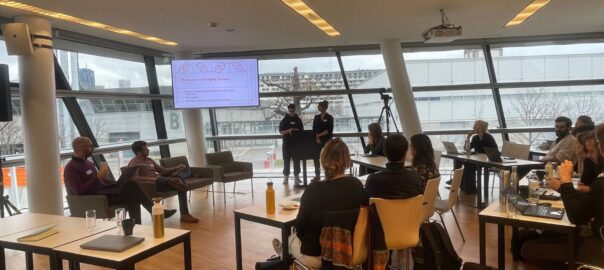
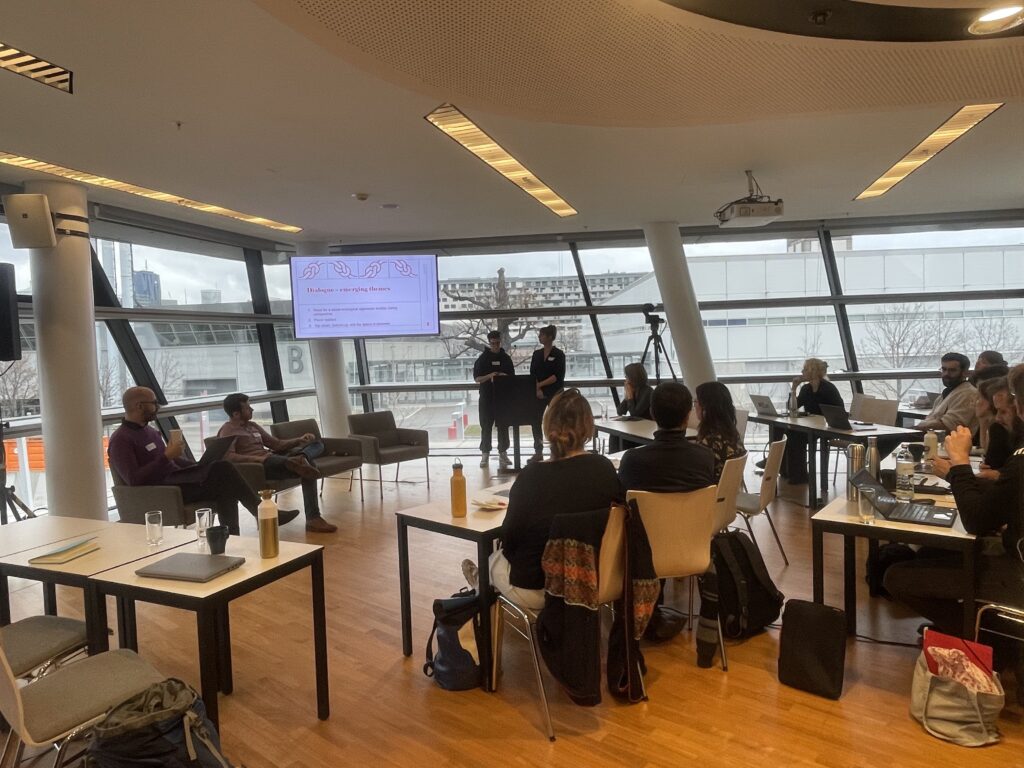
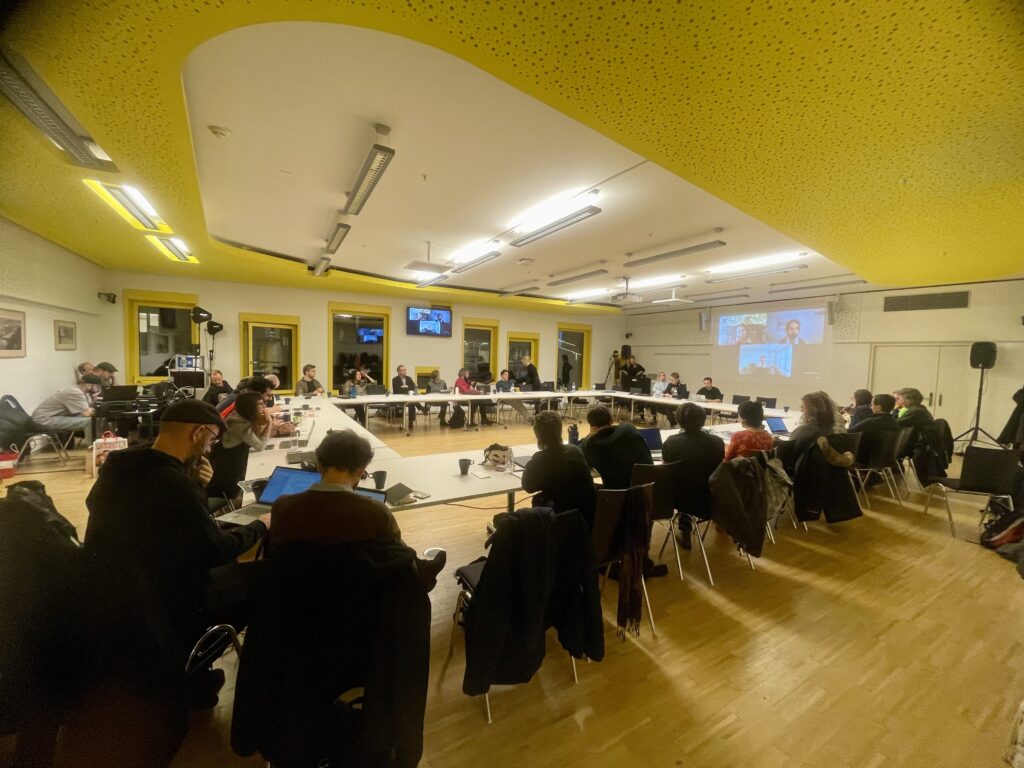
On November 29-30, we co-organised an expert workshop on Democratic Economic Planning in Times of Planetary Crises in Vienna, bringing together researchers from diverse disciplines, including political economy, ecological economics, and economic sociology. Over two days, we engaged in intensive discussions on the role of democratic planning in socio-ecological transformation, investment strategies, and technological change.

A highlight of the workshop were the three public events, which sparked significant interest both in person and online. The keynote speeches by Cédric Durand (University of Geneva) on Ecological Planning and the Problem of Knowledge in the Anthropocene and Karl Polanyi visiting professor Attila Melegh (University of Budapest) on Non-Capitalist Mixed Economies: A Polanyian Approach drew large audiences and generated lively discussions. 

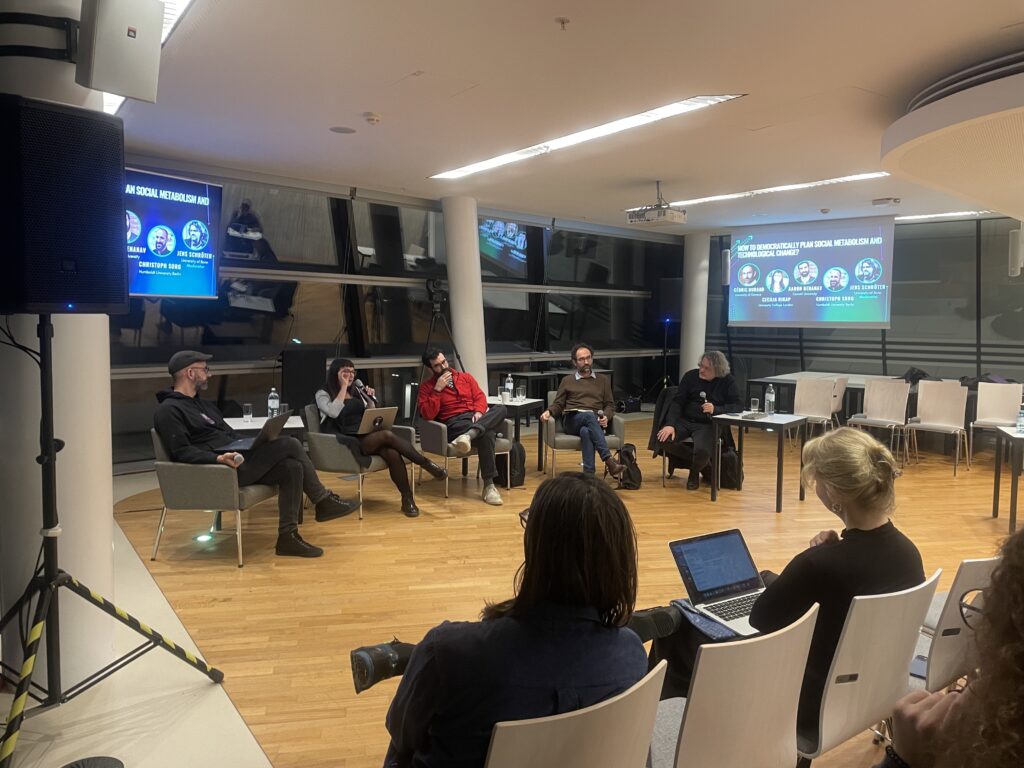
The closing panel discussion, featuring Cédric Durand, Aaron Benanav, Cecilia Rikap, Christoph Sorg, and moderated by Jens Schröter, provided a thought-provoking synthesis of the debates, addressing the challenges of planning social metabolism and technological change.

The workshop included four thematic sessions (view program here) and fostered valuable exchanges between researchers, students, and representatives from civil society and public institutions. A key outcome is the planned publication of an edited volume based on the workshop contributions.

A big thank you to all participants and our cooperation partners, the Arbeiterkammer Wien, the ISSET Institute at Vienna University of Economics and Business, the Forum Alltagsökonomie and the European Association for Evolutionary Political Economy (EAEPE) for making this workshop a success!

We are pleased to announce that the recordings of the three public events are now available online. You can watch them below:

Call for Papers – International Karl Polanyi Society (IKPS) Conference 2019

Conference 2019 in Budapest and Vienna co-organized by
International Karl Polanyi Society (IKPS) &
Karl Polanyi Research Center for Global Social Studies
Karl Polanyi and the Future of Humankind
2 May 2019 in Budapest, Hungary

Conference day with invited speakers

Karl Polanyi was not only a harsh critic of existing global capitalism and its historic development; he was also concerned with how humankind shapes its own destiny. The first part of the conference seeks to understand what possible futures can be envisioned in the current circumstances and dynamics of global capitalism after a long period of neoliberal hegemony.


Universal Capitalism in Decline?
3-5 May 2019 in Vienna, Austria

Conference with call for papers

Call for Papers
In 1945 Karl Polanyi published “Universal Capitalism or Regional Planning” , using the term “universal capitalism” to describe the political-economic system that had led to the Great Depression of the 1930s and World War II. The conference refers to this motive to analyze contemporary societal change, to share perspectives from around the globe and to reflect on methodological questions. These three broad concerns will be at the center International Karl Polanyi Society (IKPS) conference 2019.

A) Globalization, financialization, liberalization and the countermovement
“Universal capitalism” describes a series of processes familiar to us today. Neoliberal globalization, financialization and commodification universalize the market society and increase socio-cultural tensions. These globalizing dynamics have resulted in diverse anti- globalization movements, but might even have nurtured the spread of authoritarian regimes. The respective imaginaries of these movements against neoliberal globalization range from nostalgia of a lost past to visions of a commonwealth based on solidarity and equality. Karl Polanyi’s oeuvre provides us with a unique analytical framework, concepts and ideas to study these processes, crises, and transformations. Current movements should be examined from different perspectives, including:

  • Disentangling the relationship between free trade and finance on the one hand, national sovereignty and democracy on the other hand
  • Global ecological and social challenges and regional resilience strategies
  • National sovereignty, illiberal democracies and European solidarity
  • Western universalism, the rise of Asia and a new world (dis-)order
  • Trade wars, new forms of protectionism and the challenges for neoliberal globalization
  • Civil society initiatives, labor and social movements facing neoliberal globalization and political change

B) Bringing together Polanyi-inspired research from different regions and countries
Karl Polanyi has become an indispensable point of reference in critical discussions on contemporary transformations. However, scholars in different countries and regions emphasize different aspects of his work. We invite papers that focus on how Polanyi’s analyses of universal capitalism and its transformations are discussed in different parts of the world.

C) Commodification, double movement and embeddedness – concepts to understand the 21st century capitalism?
”Working with Polanyi today” means reflecting, thinking and acting under the conditions of fragmented, increasingly international academic communities in a neoliberal, more and more authoritarian environment. Polanyi, however, has always gone beyond academia, making his living as a journalist, teaching at public universities and contributing to public debates. The question of how social science can contribute to the elaboration of a democratic narrative for the ordinary people occupied Polanyi throughout his life. Therefore, we explicitly invite papers that dwell on the relation between the scientific and the ethical approach as well as possible academic contributions to public debates. Of special interest are conceptual clarifications and experimentation with new forms of partnerships between civil society, social movements and academia.

Conference language: English.

Submission of Abstracts
Abstracts should not exceed a maximum of 400 words, including the author’s full name, the title of the presentation, a maximum of 4 keywords, the author’s affiliation, full address and e- mail. Please send your abstract with all the necessary information to the address: ikps@wu.ac.at, with in the subject line “Abstract Conference 2019”.

Deadline for submitting abstracts: 31 December 2018
Notification of acceptance: 31 January 2019
Presentations of the papers will be held in Vienna.

Download the Call for Papers HERE

Venues
Budapest: Corvinus University of Budapest
Vienna: Austrian Foundation for Development Research (ÖFSE)
The organizers will arrange transportation between Budapest and Vienna for those interested.

Organizers and hosts of the conference
International Karl Polanyi Society: www.karlpolanyisociety.com
Karl Polanyi Research Center for Global Social Studies: www.karlpolanyicenter.org